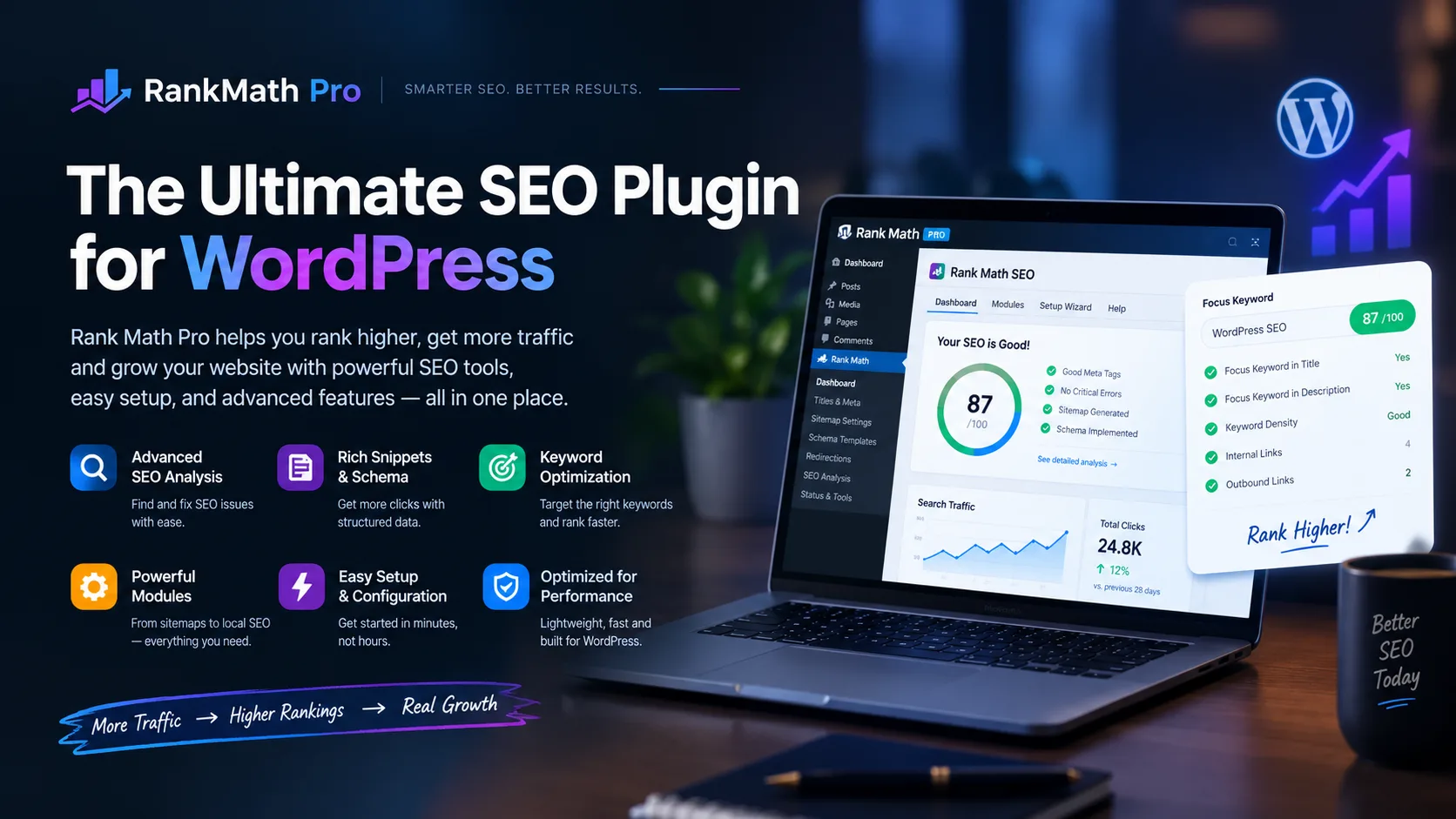
The Ultimate SEO Solution for WordPress Websites
Description
Improve Your Rankings and Grow Organic Traffic
Getting your website to rank higher on Google takes more than publishing good content. You need the right tools to optimize your pages, improve your website structure, and help search engines understand what your content is about.
A powerful WordPress SEO solution brings these tasks together in one place, making it easier to manage on-page optimization, technical SEO, structured data, and keyword analysis without relying on a collection of separate tools.
Whether you run a personal blog, an affiliate marketing website, an online magazine, or a content-based business, having a complete SEO toolkit can help you build a stronger foundation for long-term organic growth.
Powerful SEO Tools in One Place
Managing SEO can become complicated when you have to switch between different tools to optimize articles, check technical settings, and improve your search visibility.
A centralized SEO dashboard makes this process more manageable by allowing you to configure important settings, analyze individual pages, manage redirects, and review optimization recommendations directly from WordPress.
You can organize your SEO workflow, identify areas that need attention, and maintain consistent optimization across your website as your content library grows.
Advanced Content and Keyword Optimization
Creating useful content is essential, but presenting it in a way that search engines can understand is equally important.
Content optimization tools help you review important on-page elements, including SEO titles, meta descriptions, headings, keyword usage, and internal links. They can also provide recommendations to help you identify opportunities for improvement before publishing an article.
For bloggers and publishers who produce content regularly, this approach makes it easier to follow a consistent optimization process without interrupting their writing workflow.
The goal is not simply to include more keywords, but to create relevant, well-structured content that answers readers' questions and matches their search intent.
Rich Snippets and Schema Markup
Structured data helps search engines understand the information presented on a webpage.
With schema markup tools, you can configure structured data for supported content types, such as articles, products, reviews, and other relevant pages.
When implemented correctly, structured data may make eligible pages suitable for enhanced search result features. However, displaying rich snippets is never guaranteed, and the results depend on Google's requirements and eligibility criteria.
For websites that publish different types of content, having schema settings available in the WordPress dashboard makes structured data easier to manage.
Keyword Tracking and SEO Performance
Improving your search visibility requires understanding how your pages perform and where new opportunities exist.
Keyword tracking and performance analysis tools can help you monitor search terms, evaluate progress, and identify pages that may benefit from further optimization.
By reviewing available search data, you can make more informed decisions about updating older articles, targeting relevant keywords, and improving content that has the potential to attract more visitors.
Rather than relying entirely on guesswork, you can use performance insights to guide your content strategy and prioritize the work that matters most.
Technical SEO Made Easier
Technical SEO is an important part of maintaining a website that search engines can discover and understand.
A comprehensive SEO toolkit can help you manage XML sitemaps, canonical URLs, robots meta settings, redirects, and other essential configuration options.
These features are especially useful when updating existing pages, changing URLs, organizing website content, or managing a large collection of published articles.
Having these controls in one place makes routine SEO maintenance more convenient and helps you keep your website's technical settings organized.
Built for WordPress Websites
A good SEO solution should fit naturally into your existing publishing workflow.
By integrating with WordPress, these tools allow you to manage important optimization settings while creating or editing posts and pages. You can review SEO recommendations, adjust metadata, and configure relevant settings without constantly switching between different platforms.
This approach can be useful for beginners who want a more organized starting point, as well as experienced publishers who need greater control over their websites.
Website speed still depends on several factors, including hosting quality, theme design, caching, and other installed plugins, so SEO tools should be part of a broader performance strategy.
Key Features to Look For
When choosing an SEO solution for WordPress, consider the features that best match your website's needs:
- On-Page SEO Analysis: Review important optimization elements across your posts and pages.
- Keyword Optimization: Improve content relevance and target appropriate search terms.
- Schema Markup: Help search engines understand different types of content.
- Redirection Management: Handle URL changes and reduce problems caused by outdated links.
- XML Sitemaps: Help search engines discover your website's pages.
- Technical SEO Settings: Manage indexing directives and other important page-level options.
- Performance Insights: Use available search data to identify opportunities for improvement.
- Centralized Dashboard: Manage essential SEO tasks directly from WordPress.
Available features vary depending on the tool, plan, and configuration you choose.
Who Can Benefit From These SEO Tools?
A complete SEO toolkit can benefit almost any WordPress website that wants to improve its visibility in search engines.
Bloggers can use it to optimize articles before publication, affiliate marketers can improve the structure of their content, and online publishers can manage SEO across large libraries of posts.
Businesses can also use these tools to strengthen their website's technical foundation and make their pages easier for search engines to interpret.
For website owners who depend on organic traffic, a consistent SEO workflow can make managing and improving content much easier over time.
Final Thoughts
Building a successful website requires more than publishing articles and waiting for visitors to arrive. It takes consistent optimization, useful content, a well-organized website structure, and an understanding of what your audience is searching for.
The right WordPress SEO toolkit can simplify many of these tasks by bringing content analysis, technical settings, structured data, and performance insights together in one place.
Although no tool can guarantee higher rankings, using these features correctly can help you maintain a more organized SEO strategy and identify opportunities to improve your website.
Optimize your content. Strengthen your website. Grow your organic traffic.